Jawai: The Leopard Land of India
Popularly known as the Leopard Land of India, Jawai lies on the mounts of Aravalli hills in the Pali district of Rajasthan. The royal state has been the abode of many wildlife sanctuaries, and various species of birds and mammals. The leopard safari in Jawai Bandh draws the attention of wildlife enthusiasts and is built across the Jawai River. Leopards and Rabari’s tribes co-exist in this province of Rajasthan. The most interesting and untold fact about this place is that there is no man and animal conflict in the expanse of Jawai.
Leopards and the Local Tribes
Since there is not much of a prey base available for leopards, they hunt for local livestock like goats or any domestic animal of the villagers. However, the locals have a mythological belief that this has been bestowed by the Goddess, so leopards don’t harm each other, and this is widely accepted by the local tribes. Meanwhile, Jawai Leopard Safari tourism also contributes to their livelihood, which is another reason for their smooth cohabitation. Overall, the harmonious relationship between the leopards of Jawai and the local tribes is truly something to be experienced.
Jawai Dam –
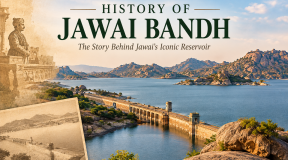
Jawai Dam was built across the Jawai River and offers stunning views of the scenic river. The construction of this dam was started on 12th May 1946 by Maharaja Umaid Singh of Jodhpur and was finished in 1957. It is the biggest dam in western Rajasthan stretching to an area of 102,315 acres. The height of the dam is 61.25 feet and the capacity is 7887.5 million cubic feet.
Jungle Safari in Jawai –
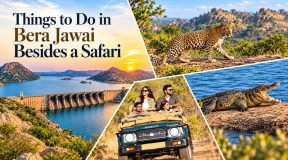
Jawai Jungle Safari ensures spotting the wild leopards in their natural habitat near the dam or granite hills with the chance of sighting many residential and migratory winged visitors. Indulge in the exciting adventure of this enthralling landscape of Jawai and Bera which gives lifetime delighted remembrances to wildlife enthusiasts. The territory of Jawai covers 60 kilometers of landscape including 16 villages and 9 points to see the leopards on a safari ride. Leopard sightings always happen to be on the hills, the predator inhabits the hills of Jawai.
The most important thing to consider while on a Leopard safari trip to Rajasthan is Jawai has a hilly terrain and being the mountainous belt, it becomes risky to go on a private vehicle. So, it is recommended to avoid that as the private vehicle cannot climb the hills. For a leopard safari trip to Jawai, there are no time restrictions other than the night rides to the surrounding hilly region.
Fauna in Jawai –
The mammals spotted during the Jawai safari are Indian Leopard, Caracal (Rare Sight), Chinkara, Desert Cat, Indian Wolf, Sloth Bear, Jungle Cat, Jackal, Striped Hyena, Blue Bulls, etc. Crocodiles are often seen in the Jawai dam while on a jungle safari tour.
It is considered that the Jawai expanse is known for leopard safari in Jawai. It is one of the preferred destinations for birdwatchers as there are more than 100 species of resident and migratory birds are sighted around. The resident and migratory birds like Indian Eagle Owls, bulbul, spotted owls, and many other bird species are spotted here.
Jawai Jungle Safari Timings –
The timings for the Jawai safari can be relished from sunrise to sunset. There’re no declared government regulations and hence no timelines are defined for a safari in Jawai, Rajasthan. Travel enthusiasts can go on safari for unlimited time and at any time of the day. Jawai night safaris are restricted by local tribes, considering the disturbance caused to the wildlife during the night rides on the hills of Jawai.
How to reach Jawai?
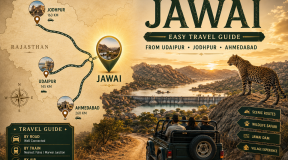
By Air: The nearest airport to Jawai is Jodhpur Airport, which is approximately 135 km away. From the airport, you can take a taxi or hire a car to reach Jawai.
By Train: The nearest railway station to Jawai is Falna Railway Station, which is about 45 km away. You can take a taxi or hire a car from the station to reach Jawai.
By Road: Jawai is well-connected by road, and you can reach it by bus, taxi, or car. If you are driving, the easiest route is to take NH 62, which connects Pali to Udaipur. From there, take a left turn towards Jawai Dam Road, which will take you to the Jawai region.
Best time to visit Jawai –
Winter (November to March)
The best time to visit Jawai is during the winter months of November to March. During this time, the weather is pleasant and mild, with daytime temperatures ranging from 25 to 30 degrees Celsius and nighttime temperatures dropping to around 10 degrees Celsius. The winter months are also the peak season for wildlife sightings, as the animals are more active and visible during this time.
Summer and Monsoon (April to September)
The summer months from April to June are quite hot, with temperatures often soaring above 40 degrees Celsius, making it less comfortable for outdoor activities. The monsoon season from July to September brings heavy rainfall and the roads can be difficult to navigate.
However, if you are interested in bird watching, the monsoon season is a good time to visit Jawai as the region is home to many migratory birds. Overall, the best time to visit Jawai is during the winter months when the weather is comfortable, and the wildlife sightings are at their best.
Point of Attractions on Jawai Leopard Safari Tour –
– Leopard Sighting
– Wildlife Safari
– Bird Watching
– Granite hills & temples
– Jawai Villages
– Rabari Tribe
– Bera River
– Jawai River & Dam
Accommodation in Jawai –
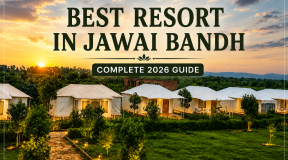
Undoubtedly, there are various homestays, tented accommodations, and luxury resorts in Jawai, but choosing one is quite difficult. To bring a perfect option to your notice, I suggest considering Agvani Resort as an ideal place to stay. The famous wildlife lodge offers a unique and comfortable stay while catering to the need of the guests. The leopard safari trip in Jawai and rural tours are organized by the resort, so one can experience the best of Jawai in one place. Get the breathtaking sight of the wild beast, scenic hills, exotic avifauna, aqua fauna, and picturesque dam during your stay in Jawai.
Frequently Asked Questions (FAQs)
1. Where is Jawai located?
Jawai is located on the mounts of the Aravalli hills in the Pali district of Rajasthan, and is popularly known as the Leopard Land of India.
2. Is it safe to see leopards in Jawai? Is there any man-animal conflict?
Yes, it is generally considered safe. In fact, Jawai is unique because there is no recorded man-animal conflict here — leopards and the local Rabari tribes have coexisted harmoniously for generations.
3. What is the best time to visit Jawai for a leopard safari?
Overall, the winter months from November to March are considered the best time, with pleasant weather (25–30°C in the day, dropping to around 10°C at night) and peak wildlife activity. On the other hand, summers (April–June) are very hot, and monsoon (July–September) brings heavy rain, though it’s good for birdwatching.
4. What are the timings for the Jawai jungle safari?
Generally, safaris can be enjoyed from sunrise to sunset, with no fixed government-regulated timings. However, night safaris into the hilly regions are restricted by local tribes to avoid disturbing the wildlife.
5. Can I take a private vehicle for the safari?
It’s not recommended. Since Jawai has hilly, granite terrain that private vehicles usually cannot climb, it’s advisable to use a proper safari vehicle instead.
6. What animals can be spotted in Jawai besides leopards?
Along with the Indian Leopard, you may also spot Caracal (a rare sighting), Chinkara, Desert Cat, Indian Wolf, Sloth Bear, Jungle Cat, Jackal, Striped Hyena, Blue Bulls, and crocodiles in the Jawai Dam.
7. Is Jawai good for bird watching?
Yes, indeed. Jawai is home to over 100 species of resident and migratory birds, including Indian Eagle Owls, bulbuls, and spotted owls, which makes it a popular spot for birdwatchers, especially during the monsoon season.
8. How do I reach Jawai?
- By Air: Nearest airport is Jodhpur Airport (~135 km away).
- By Train: Nearest railway station is Falna Railway Station (~45 km away).
- By Road: Well-connected via NH 62 (Pali–Udaipur route), with a left turn onto Jawai Dam Road.
9. When was the Jawai Dam built?
Construction started on 12th May 1946 under Maharaja Umaid Singh of Jodhpur and was completed in 1957. As a result, it is now the largest dam in western Rajasthan.
10. Where should I stay in Jawai?
There are homestays, tented camps, and luxury resorts available. In particular, Agvani Resort is a recommended option, offering comfortable stays along with organized leopard safaris and rural tours.
Conclusion –
Jawai National Park is nowadays emerging as one of the best wildlife reserves in Rajasthan. So, wildlife enthusiasts can plan their memorable holidays to Jawai with a luxurious stay at Agvani Resort.