Ask ten people about Jawai and nine of them will say the same thing. Leopards. Safari. Rocks. That’s the whole picture in their head, and honestly, fair enough; that’s what’s trending right now. But the real History of Jawai Bandh goes back centuries further than any jeep track, long before anyone thought to build a dam here at all.
This isn’t just “dam built in year X” trivia. It’s Vedic legend, a Mahabharata thread, Rajput rule, a flood that forced a kingdom’s hand, and eventually, almost by accident, a landscape where leopards and people figured out how to coexist. Most blogs skim past all of this. A few even get the basic facts wrong. Here’s the version that actually holds up.
Long Before the Dam: Jawai’s Ancient Roots
Jawai existed centuries before any reservoir did. This section covers the sage who once meditated here, the region’s possible Mahabharata connection, and the Rajput rulers who held Pali long before independence.
The Legend of Maharishi Javali
Here’s a piece most people never come across. In the Vedic era, a sage named Maharishi Javali is said to have found sanctuary somewhere in this exact landscape, choosing it specifically for meditation. Not some random patch of desert either. The same rocky, quiet terrain that today’s leopards treat as home.
You can take that as literal history or as folklore passed down through generations; either way works. What it tells you is simple. This land has always pulled people in, looking for stillness. Long before “wildlife tourism” existed as a phrase anyone used, Jawai was already known as a place to come and just breathe.
A Mahabharata Connection
There’s a local legend here too, tied to the Mahabharata. People say the Pandavas passed through this area at some point during their exile, spent time in these hills, and eventually moved on. Don’t expect to find this in a textbook anywhere. No inscription proves it. No dig site backs it up either. It’s just not written down anywhere official.
Stories like this just get passed around, though. Grandfather to grandson, and so on down the line, nobody ever really felt the need to write it down because it kept surviving fine without paper. Whether it actually happened exactly that way, who knows, honestly. Stopped mattering a while back if you ask most people here. It’s simply become part of how this land gets talked about, generation after generation.
Rathore Rule and the Pali Region
Skip past the legends and the history gets solid fast. Late 1500s through the 1600s, the Rathores of Marwar ran Pali and everything around it. Not some forgotten backwater either. Pali sat on trade routes linking inland Rajasthan to the coast, so whoever held it actually mattered.
That legacy carried well into the 1800s too. When the revolt of 1857 against the British broke out, Pali district was not a bystander. Thakur Kushal Singh Champawat of Auwa — a village in present-day Pali district — rallied Thakurs from neighbouring thikanas and led a fighting force against the British, with battles fought at Bithoda and Auwa itself. It wasn’t a brief flare-up either: the resistance stretched on for years, and Kushal Singh didn’t surrender until August 1860. So really, Jawai already carried centuries of its own history, including a real chapter in India’s fight against colonial rule, long before anyone even brought up the idea of a dam.
Why the Jawai Dam Was Actually Built
People usually assume something this size got built because a king wanted his name remembered forever. That’s honestly not what happened here. What actually pushed this forward was way more urgent than legacy. Closer to plain survival, if you think about it.
The 1903 Floods That Started It All
1903 is really where this story begins. The Jawai River broke its banks that year, and flooding ripped through Pali and Jalore with barely any warning at all. Homes destroyed. Fields wrecked. People left with next to nothing to rebuild from. Not your typical monsoon overflow either, this was bad enough to shake up how the entire region viewed the river running through it.
Damage on that scale gets people thinking fast. Somebody has to bring this river under control before it happens all over again. But thinking about a solution and actually building one turned out to be two very different things, and this particular idea just sat around for decades, passed between one official and the next, before anybody finally picked up a shovel.
Maharaja Umaid Singh and the 1946-1957 Construction
Construction started on 12th May 1946, led by Maharaja Umaid Singh of Jodhpur, and pretty much from day one, things got complicated. Money kept running dry. Engineers kept running into problems nobody had planned for. One delay stacked on the last, year after year without much letting up. By 1951, when India rolled out its first Five-Year Plan, the project had already gone through more than 124 lakh rupees, which was an enormous sum back then.
Now think about someone who actually lived through 1903 and was still around when 1957 finally came. That’s fifty-four years of carrying a memory like that. And then, out of nowhere really, the exact same river that once tore their whole life apart is just sitting there. Calm. Held back by nothing but concrete and stone and eleven long years of effort. By the time it was done, it stood as the largest man-made dam in western Rajasthan, with a reservoir spreading out to nearly 13 square kilometers once full. Not a small thing to witness, watching your own history get rewritten like that, right in front of you.
Correcting a Common Myth
Worth fixing this properly, because the wrong version won’t stop making the rounds online. A good number of blogs, ours included at one point, credited the dam to Maharaja Jaswant Singh II and dated it somewhere in the 19th century. That’s wrong. Plain and simple. And it’s the kind of small error that spreads fast once enough websites copy from each other without bothering to check.
Every solid source agrees on what actually happened. Wikipedia, heritage records, other resorts across Jawai — they all point in the same direction. Maharaja Umaid Singh built it. Construction ran from 1946 to 1957. Squarely a 20th-century project, nothing earlier. Feels like a small detail to fuss over, maybe, but getting the real Jawai Dam history right matters more than repeating what’s already floating around.
What the Dam Was Meant to Solve
This dam wasn’t built to sit pretty on some government map. It existed to fix real problems for the people living across Pali and Jalore, and for the most part, it actually did that.
Water for Pali and Jalore
Once it started working, Jawai Bandh became Pali district’s main water source. Villages across Pali and Jalore leaned on it hard, especially for irrigation whenever the reservoir carried enough water through the season. For a place that had been flattened by flooding just decades before, having something steady and dependable changed everyday life more than people probably realized at the time. Crops surviving the dry months. Villages not running dry by midsummer.
Powering Local Agriculture
Farming came first, and it stayed that way. Canals carried water out from the reservoir to fields all around, so crops could survive even the harshest dry spells. Hydroelectric power got talked about early on too, but that conversation didn’t go far. Once it was clear how badly farmers needed irrigation, that became the real focus, and the power idea just sort of dropped off.
How the Leopards Found Jawai
This is the part most write-ups never really get into, and it’s honestly the best bit. Nobody planned for leopards to show up here. There was no meeting, no decision to turn Jawai into a sanctuary. It happened slowly, almost without anyone noticing, simply because of what the land around the dam turned into over the following decades. If you’re already thinking about spotting one yourself, our Jawai leopard safari booking guide breaks down timings and current pricing in detail.
Granite Hills, Perfect Habitat
Once the reservoir settled and the terrain around it took shape, the massive granite boulders scattered through Jawai turned out to be exactly what a leopard needs. Caves and crevices to vanish into through the day. Warm, flat rock to stretch out on. Enough natural cover to hunt without much struggle. None of it was planned. It just lined up on its own.
Decade after decade, leopards kept coming and simply stayed. Today, somewhere between 60 and 70 of them live across this stretch of Rajasthan, which is remarkable given how the population grew almost entirely on its own, long before any formal protection was in place. It was only later, on 23 February 2010, that the Rajasthan Forest Department formally notified the core area as the Jawai Bandh Leopard Conservation Reserve — years after the leopards had already made this land their own.
Coexistence With the Rabari Community
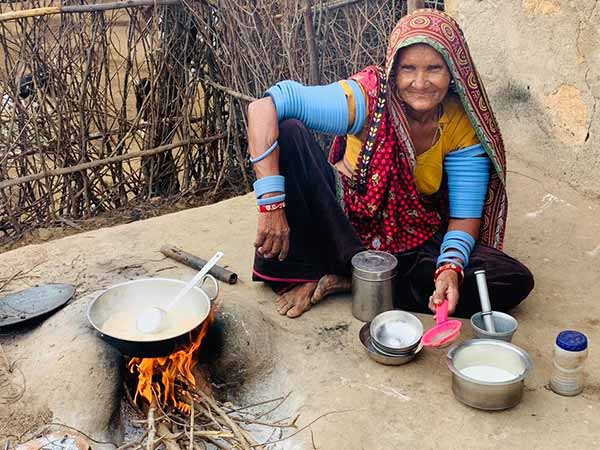
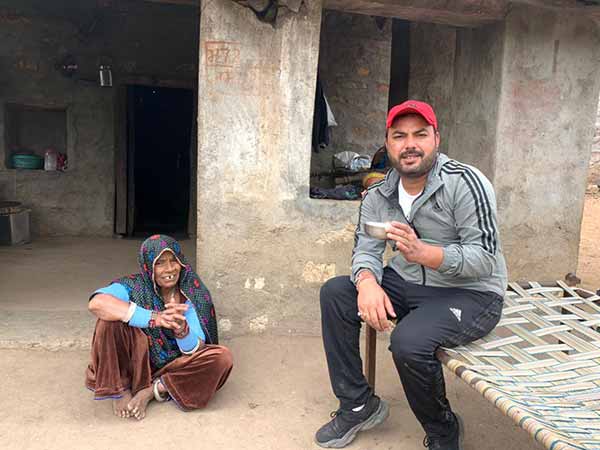
Now here’s the part that really sets Jawai apart. The leopards never drove anyone off this land. They just settled into it alongside the Rabari community instead of competing for space. Generations of Rabaris have grazed goats and sheep across these same hills, and somewhere in all that time, nobody signed anything, nobody stepped in to manage it; a quiet kind of trust just built itself between the herders and the cats.
Locals talk about leopards almost like neighbours. Not something to dread, just part of the land they grew up walking through. That bond is really the soul of what makes Jawai Bandh different from every other wildlife spot in the country. It’s not a fenced-off enclosure built to let tourists watch safely from a distance. It’s a whole ecosystem that grew up naturally around a dam, and only picked up formal protection decades after the leopards had already settled in.
From Water Reservoir to Wildlife Destination
Somewhere between the dam’s completion and now, Jawai quietly turned from a flood-control project buried in old files into one of Rajasthan’s most talked-about places to visit. And it took its time getting there, slower than most people assume.
- Word about leopard sightings spread first among wildlife photographers, long before regular travellers had even heard the name
- Local resorts and safari operators grew up slowly around that interest, offering guided drives instead of leaving people to wander around on their own
- Responsible tourism practices came in over time, meant to protect the leopards and the Rabari way of life rather than get in the way of either
- What began as scattered word-of-mouth among a small circle of wildlife lovers has, over the years, turned into steady, growing Jawai Bandh tourism, now bringing in travellers from across India and beyond
None of this happened overnight, and that’s worth sitting with for a second. It took decades for Jawai to go from a regional irrigation project to a name people now search for on purpose while planning a trip through Rajasthan. And a safari drive is really just the start — our roundup of activities in Jawai covers everything else worth doing beyond the jeep tracks.
What Jawai’s History Means for Travellers Today
Knowing all this changes how the place actually feels once you’re standing in it. You’re not just hoping to spot an animal and check a box off some list. You’re standing on land shaped by centuries of legend, a flood that pushed an entire kingdom into action, and a dam that ended up accidentally building a home for leopards still thriving there today, decades on.
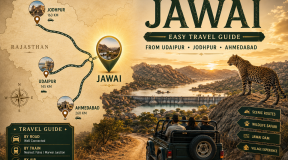
That’s something a plain wildlife trip just can’t give you. Once you know the backstory, even the ordinary things to do in Jawai start to feel different. So when your guide points at a leopard stretched out on a granite rock in the afternoon sun, think about this. And if you haven’t locked in your route yet, our guide on how to reach Jawai from Udaipur, Jodhpur or Ahmedabad walks through the options before you hit the road.
That same rock might have been sitting there long before the dam was even built. Maybe even since Maharishi Javali’s time, if you believe the old stories people still tell around here.
If you’re planning your trip around all of this, here’s a quick way to see how the timeline lines up with what you’ll actually encounter on the ground.
| Era | What Happened | What You See Today |
|---|---|---|
| Vedic Era | Maharishi Javali’s legend and a Mahabharata connection | The same granite hills and untouched quiet |
| 16th–17th Century | Rathore rule over Pali | Regional heritage and local culture still visible |
| 1857 | Thakur Kushal Singh Champawat of Auwa led Pali’s resistance against the British | Auwa and Bithoda remain sites tied to this history |
| 1903 | Devastating floods across Pali and Jalore | The historical reason the dam was eventually constructed |
| 1946–1957 | Dam construction under Maharaja Umaid Singh | The reservoir itself, still in active use |
| Post-1957 (over subsequent decades) | Leopards gradually settled into the granite terrain | A remarkable example of leopard-human coexistence |
| 2010 | Core area formally notified as a Leopard Conservation Reserve | Official protected status for the reserve’s core zone |
| Recent Decades | Rise of safaris and boutique resorts | Growing Jawai tour package options for visitors |
Once the history and the timeline are sorted in your head, the rest is really just about picking where you’ll rest between drives.
Carrying the Legacy Forward
Jawai’s story didn’t stop once the dam got finished. It’s still going, honestly. Every safari drive, every walk through a village, every evening spent watching the light fade over the reservoir — that’s all part of a history that keeps adding new pages. Sages, kings, a flood nobody asked for, and leopards who just showed up and made this place home. Nobody planned that last part. It just happened. And for where to actually stay while you take all this in, our complete 2026 guide to the best resort in Jawai Bandh lays out room types and what each property genuinely offers, not just what they claim to.
FAQs
When was Jawai Bandh built?
Construction kicked off on 12th May 1946 and dragged on until 1957. That was under Maharaja Umaid Singh of Jodhpur. Over a decade, mostly because money kept running short and there were a fair few technical headaches along the way.
Who built Jawai Dam and why?
That was Maharaja Umaid Singh. Flooding’s really the reason it exists at all; Pali and Jalore got hit hard by the Jawai River back in 1903, and something had to give. Irrigation was part of the thinking too, and there was some talk of hydro power, though that never became the main focus.
What is the historical significance of Jawai Bandh?
Honestly, the dam’s only half the story. Go back further, and you’ll hit old Vedic-era legend tied to a sage called Maharishi Javali, plus a loose thread connecting the region to the Pandavas’ exile in the Mahabharata. Add centuries of Rathore rule on top of that. Even the 1857 revolt reached Pali district, led locally by Thakur Kushal Singh Champawat of Auwa — long before anyone had drawn up plans for a dam.
Is Jawai Bandh connected to the Mahabharata?
Locals will tell you the Pandavas spent part of their exile somewhere in this area. No written record proves it either way. It’s just one of those stories that got passed down, generation after generation, and never really let go.
How did Jawai become famous for leopards?
Those granite hills around the reservoir turned out to be exactly what leopards need: caves to disappear into, flat rock to sun themselves on come morning. They moved in gradually over the years and, somehow, worked out a way to share this land with the Rabari community without much friction at all. The area’s core zone was later formally notified as a Leopard Conservation Reserve in 2010. That’s really the reason Jawai ended up on everyone’s map.