Picture this. Flights booked, leave approved, half the office already told about the leopards. Then a tiny doubt creeps in. What if the cat just doesn’t turn up?
Fair worry. Scroll through a few travel pages and you’ll spot claims like “99% sightings” and even “99.99%.” Sounds great. Also sounds a little too neat, doesn’t it?
This blog tells you what’s true and what’s just sales talk. You’ll find out how often people really see a leopard in Jawai. You’ll also learn why some safaris end with nothing, what you can do to get lucky, and what to do if the leopard just doesn’t show up.
Grab a chai. It’s a long one, but the headings make it easy to skim.
Is a Jawai Leopard Sighting Guaranteed in Jawai? The Straight Answer
Quick truth before anything else: nobody can promise you a leopard, and that’s true in every forest on earth. Jawai just stacks the odds in your favour better than most.
The Honest Answer
No, a sighting is not guaranteed in Jawai. Not on day one, not on day five.
A leopard is a wild animal with its own plans. Last night it may have chased a nilgai until 3 AM, and now it’s sleeping inside a cave while you stand outside with a camera. Nobody can fix that. Not the guide, not the driver, not the resort.
What an honest operator can say is this: the chances are really good, and here’s why. That’s what the rest of this blog is about.
Is the 99% Leopard Sighting Claim Real?
Most big numbers online aren’t pulled out of thin air. But they aren’t tested records either. They usually come from a few places:
- Winter months only, when sightings are at their best
- Counting any wild animal, not just leopards
- A guide’s gut feeling after years on the same trails
- Numbers repeated from page to page without anyone checking them
So read 99% as “great odds in a good season.” It’s not a promise, and it’s not a lab result.
Jawai Leopard Sighting Chances by Season
You’ll see everything from 40 percent to 99 percent floating around online. There’s no official government figure for the Jawai leopard safari success rate. What guides and resorts have is experience, and it points the same way every year. Here’s the simple version.
| Season | Months | What Usually Happens |
|---|---|---|
| Winter | October to March | One of the best periods to visit Jawai, with generally mild weather, comfortable rocky trails and good opportunities for leopard sightings. |
| Summer | April to June | Early-morning and evening safaris are preferable. Leopards may rest in the shade of boulders and visit water sources during warmer weather. |
| Monsoon | July to September | Lush greenery transforms the landscape. Tall grass, rainfall and slippery tracks can make sightings more challenging, and safari conditions may vary. |
Monsoon isn’t a bad time to visit, by the way. The hills turn green, there are lots of birds, and hardly any crowds. The only catch is that leopards are a bit harder to spot then.
Want to check month by month? Read this month-by-month guide to seeing leopards in Jawai. If you are thinking of winter, our post on why winter is the best season for a Jawai leopard safari explains why.
What Counts as a Leopard Sighting?
A lot of people never think about this. Sometimes a sighting means a leopard lying on a rock 20 meters away, just looking at you. Sometimes it’s only a tail going behind a boulder for two seconds. Resorts count both when they say “we saw one.” So when you compare numbers from different places, ask what they actually count.
Sunrise or Sunset, Which One Wins?
It’s a close call. In the morning, the leopards are usually on their way back to the hills after a night out. The air is cool, so they find a warm rock and sit there, looking around. In the evening it’s the other way. They wake up, stretch a bit and start walking. The rocks look orange and gold at that time, and it’s really nice to see.
If you ask the guides, many will say morning. But why choose? Do both. Just keep them on two different days.
Why Jawai Gives Better Jawai Leopard Sightings Than Most Jungles
Jawai isn’t like the forests you may know. The hills are open, the leopards are used to people, and the guides know the area very well. All of this makes it easier to find a cat. The area is also protected: the core hills were notified as the Jawai Leopard Conservation Reserve in 2010, which helps keep the habitat safe. You can read more about how that came about in our history of Jawai Bandh.
Bare Rocks Make It Easy
In most Indian forests, the trees are thick. A leopard can sit just ten meters from the road and you would never see it. Here, it’s different. The hills are bare granite with big boulders and some small bushes.
A spotted cat sitting on a light-coloured rock is hard to miss. So a leopard safari in Jawai feels like you know what to look for, not like you’re searching in the dark.
Cats That Grew Up Near Villages
Around 60 to 70 leopards live in this area. The same hills also have herders, small villages and old temples, and people have lived next to these cats for a very long time. Because of this, the leopards aren’t scared of people.
A gypsy engine doesn’t bother them. They have been seeing people, jeeps and goats since they were cubs. This is one big reason why you spot them more often here.
Guides Who Know the Hills
A lot of visitors don’t know this. Local guides and villagers see the leopards almost every day. They know where a mother is raising her cubs, which cave a male likes to use, and where fresh pugmarks were found yesterday. So before the gypsy even moves, the guide already has an idea of where to go. That’s worth more than luck.
Wondering about tigers instead? This Jawai vs Ranthambore safari comparison will help you decide.
Want a Guide Who Already Knows Where the Cats Are?
Tell us your dates and we will suggest the best safari slots for your stay.
Reasons Why Some Jawai Safaris End Without a Leopard
Even in a good month, some safaris don’t show a leopard. Most of the time the reason is small and can be fixed, so it helps to know what they are.
The Weather
Heavy rain, a very hot day or a cold, cloudy morning can change where the leopards go. In the rains, they hide more. In peak summer, they stay in the shade till late in the day.
The Leopard Was Resting
Leopards don’t hunt every single night. After a big meal, one may rest for a day or two. And yes, that could be the day you booked.
You Booked Only One Drive
This is the most common reason. One drive means one chance. With two or three drives, the picture changes a lot.
Small Mistakes Add Up
Some small things can waste your time:
- Getting to the pickup point late
- Talking loudly or playing music
- Standing up in the gypsy, which can scare the cat
- Wearing bright clothes that stand out on the rocks
One of these won’t ruin your trip. A few together might.
How to Increase Your Chances of Seeing a Leopard in Jawai
You can’t tell a leopard when to show up, but you can help your luck a little. These tips are easy, and most of them are free.
Don’t Rely on One Drive
If you can, do a morning drive and an evening drive. Even better, spread them over two days. Different day, different mood.
Here is a rough idea of how the odds improve as you add drives. This is not a statistic, just how guides explain it.
| Number of Drives | What It Feels Like |
|---|---|
| 1 Drive | One roll of the dice. You might spot a leopard, but sightings are never guaranteed. |
| 2 Drives (Morning and Evening) | A better opportunity to experience different active periods and improve your chances of a sighting. |
| 3 Drives Over 2 Days | A good plan for most guests, offering more opportunities to explore Jawai, even during a quieter season. |
| 4 or More Drives | More opportunities to look for leopards while enjoying Jawai’s granite hills, wildlife and landscapes. |
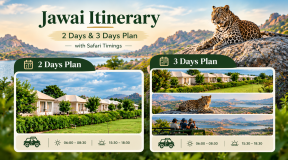
Not sure how to plan the days? This Jawai 2-day and 3-day itinerary has an easy plan to copy.
Pick the Right Time
Winter is best, so try for October to March if your dates can move. Coming in summer? Book the first slot of the day and be ready to wait.
Be a Good Passenger
A good Jawai wildlife safari needs some luck, but it needs a good group too. These habits help:
- Reach the pickup point 10 to 20 minutes early
- Talk softly and keep your phone on silent
- Wear brown, olive, or grey
- Carry water, a cap and a camera with a good zoom
- Stay seated in the vehicle, and never get out unless your guide says it is safe
If the guide says wait, then wait. Guides notice things you won’t, like a langur’s alarm call or fresh pugmarks on the track.
Patience is the real superpower here. Many of the best sightings happen in the last ten minutes of a drive, right when everyone has started checking their watch.
Carrying a camera? Our wildlife photography guide for Jawai has simple tips for sharper shots.
No Leopard Today? Other Wildlife You Can Spot in Jawai
A quiet drive isn’t a wasted one. Jawai has enough going on around the hills that you’ll still head back to the resort with a few good stories.
Other Animals Worth Looking For
Jawai has more going on than leopards. Keep your eyes open for:
- Striped hyenas
- Mugger crocodiles around the dam
- Jackals, foxes and nilgai
- Plenty of birds, especially in the cooler months
- A sloth bear, if luck is really on your side (rare, so don’t count on it)
Plenty of guests say a hyena trotting across the path at dusk was as good as a leopard. A proper Jawai wildlife safari was never about just one animal anyway. If you want a drive that focuses on the wider wildlife, have a look at our Jawai jungle safari post.
Villages, Dam and Hilltop Tea
Drive through a Rabari village, and you’ll see a way of life that hasn’t changed much in decades. The Jawai dam is great for birds and crocodiles. And a cup of tea on the hills at sunset? Hard to beat, with or without a cat in the picture.
Safari Setup at Agvani Resort
Agvani Resort is based in Bera, right where the safaris start. Here’s how the options work, what comes with them, and why a short commute helps.
What’s on Offer
Every safari runs in an open gypsy. Tea and coffee are included, and pickup and drop-off are available.
| Safari | Timing | Vehicle |
|---|---|---|
| Morning Leopard Safari | 5:30 AM to 8:30 AM | Open Gypsy, 6-seater |
| Evening Leopard Safari | 5:00 PM to 8:00 PM | Open Gypsy, 6-seater |
| Full Day Safari | 11:30 AM to 6:30 PM | Open Gypsy, 4-seater |
| Jungle Safari | 10:00 AM to 12:30 PM | Open Gypsy, 6-seater |
| Bird and Crocodile Sighting | 10:00 AM to 12:00 PM | Open Gypsy, 6-seater |
Here, the whole gypsy is yours. It takes 1 to 6 people, and nobody else is added to your group. This matters more than it sounds. Say the guide thinks a leopard is somewhere in those rocks. You can just sit there and wait. Nobody in the gypsy is a stranger who wants to move on. Honestly, a leopard safari in Jawai is much nicer when you’re not watching the clock.
For rates, inclusions and how the booking works, see our main Jawai safari page.
Why It Helps to Stay Close
Staying near the start point saves you a long drive in the dark. You wake up, drink some tea, and get in the gypsy. That’s it. You also arrive on time, and that matters because early light is the best time to spot a cat.
Planning the full trip? This Jawai leopard safari package booking guide shows how the stay and the safaris can go together.
The Bottom Line: High Chances, Not a Promise
So, is it guaranteed? No. Is it likely? Very. Go in with sensible expectations, book more than one drive, and the odds work out nicely for most people.
Here’s the quick recap:
- Nobody can guarantee a leopard, so be wary of anyone who does
- The real Jawai leopard safari success rate is high in winter and lower in the monsoon
- Two or three drives work far better than a single one
- A calm, patient group with a good guide gets lucky more often
And even on a day with no leopard, Jawai gives you hills, hyenas, birds, and some of the best sunsets in Rajasthan.
Ready to plan it? Message Agvani Resort on WhatsApp at +91 7426936663, or use our contact page to sort out your dates and safari slots.
Questions People Ask Before Booking
Is a Jawai leopard sighting guaranteed in Jawai?
No. Nobody can guarantee a wild animal. The chances are high, especially from October to March, and booking more than one drive improves them.
Can you go all the way to Jawai and still not see a leopard?
It can, yes. Not often in winter, but it does happen. The leopard isn’t following your plan; it’s just doing its own thing. So book more than one safari, and keep a free slot in your plan in case you need to go out once more.
Which is better, the morning safari or the evening safari?
Both are good. In the morning, leopards are often coming back after a night of hunting, so they’re easy to find near the rocks. Evenings are good too. By late afternoon, the cats are up from their naps and moving around. Some people like that better, because the sunset on the rocks looks great in photos. Can’t decide? Book one of each and then you’ll know.
Only 2 days in Jawai? How many safaris should you book?
Three is good if you have the energy. Do an evening safari on the day you reach, a morning one the next day, and another evening one after that. Even if one of them shows nothing, you still get two more shots at it.
Can you see leopards in Jawai in summer or monsoon?
Yes, they live here all year. It’s just harder in summer and the rains. In April to June the cats stay in the shade, so take the earliest safari. In the monsoon the grass is tall and the roads are muddy. Winter is still the best time.
What if the first safari has no leopard?
Don’t worry, it happens. Ask your guide where a leopard was seen last and try that area next time. If the morning had nothing, go in the evening or try again the next day.
Can kids go on the safari? What about first-timers?
Yes, both can go. The leopards here are used to people, and a guide stays with you the whole time. Just sit down, speak softly and don’t stand up. Hold small kids close, because they get excited.
Is the whole jeep private?
Yes. At Agvani Resort the gypsy is yours alone and takes 1 to 6 people. Nobody else is added to your group.