There’s a specific kind of cold that hits you at 6 AM in an open gypsy in Jawai. Sharp. Wide awake in seconds. And honestly? That’s really the whole point, though. Jacket pulled tight, guide pointing at some granite boulder just catching the first light, and boom, there’s the leopard, sprawled out on the warm rock like you don’t even exist.
This is exactly why a Jawai Leopard Safari in Winter is the trip people bring up years later. Not just the sighting itself. The whole feel of it. Cool air, sharp visibility, leopards actually sitting out in the open instead of hiding.
So if you’ve been asking what the best time to visit Jawai really is, here’s the full picture. Weather, leopard behavior, booking timing, and how to actually plan it right.
Why Winter Changes Everything for a Jawai Leopard Safari
Jawai sits in the Aravalli foothills, and the climate here swings hard between seasons. Summer is brutal. Winter flips that completely: cool mornings, dry air, and hours you can actually spend outdoors without wilting.
That shift changes more than just your comfort level. It changes how the safari itself plays out.
Jawai’s Winter Climate, By the Numbers
Here’s what you’re actually walking into, month by month.
| Period | Daytime Temp | Morning Temp | What It Means |
|---|---|---|---|
| October–November | 18°C to 30°C | Mild, slightly cool | Comfortable, fewer crowds |
| December–February | 10°C to 25°C | Can drop to 6–8°C | Coldest, clearest, peak season |
| March | 20°C to 32°C | Cool, warming fast | Still pleasant, lighter crowds |
If you’re travelling anywhere between December and February, bring an actual jacket, not some light layer that’ll fold the second the wind hits. Those pre-dawn drives get colder than most people expect, and there’s nothing stopping that chill once the gypsy’s moving, no windshield, nothing. Loads of first-timers underestimate this bit and end up shivering through what’s usually the best sighting window of the whole trip.
Why Leopards Come Out to Bask in Winter Light
Here’s the part most guides skip over. Leopards seek out heat, and Jawai’s granite hills soak up sun fast once morning light hits them.
Through a cold winter night, that same rock cools right down. So when the sun finally climbs, leopards head straight for the exposed boulders and just sit there. Warming up. Not moving. Sometimes for a solid ten or fifteen minutes before wandering off.
That’s the window every guide in Jawai is chasing on the morning drive. It’s also why experienced guides tend to head toward specific rock faces first thing; they know which boulders catch sun earliest and which ones leopards have used before.
Compare that to summer. The heat hits early, and leopards duck for shade almost the second the sun’s up properly. No lingering. No open, relaxed sighting. Just a blur disappearing into a crevice. Winter gives you time. Real, unhurried time with the animal out in plain view, sometimes close enough that you don’t even need a zoom lens to see it clearly.
Thinner Cover Means Clearer Sightings
Winter also strips the landscape back. Scrub thins out, grass dries and dies down, and the whole hillside opens up compared to the lush post-monsoon green you’d see in September or early October.
For your guide, that’s a massive advantage. Spotting movement against bare granite is a lot easier than scanning through thick brush. Even from a distance, a tawny coat against grey rock stands out clearly, something that’s almost impossible during the monsoon months when everything blends into green.
That’s a big part of why sighting rates tend to climb steadily through December and January, right alongside the basking behavior. Guides who’ve worked this terrain for years will tell you the same thing. Winter simply gives them more to work with, both in terms of animal behavior and plain visibility.
Best Spots in Jawai to Spot Leopards This Winter
Not every part of Jawai offers the same sighting odds, and winter changes which zones are worth prioritizing on a given morning.
- Bera hills – One of the most reliable stretches for leopard activity, with clusters of granite caves that hold heat well into the early morning
- Perwa region – Known for open rock faces that catch sun early, a favorite basking zone once winter sets in
- Sena village outskirts – Quieter, less crowded routes with good visibility across rolling boulder fields
- Areas closer to Jawai Dam – Worth combining with your safari since winter also brings water-dependent wildlife closer to the shoreline
Guides usually work out the route on the day itself, going off recent movement and whichever rocks are heating up fastest that morning. That’s a big part of why experienced, local operators matter here. They’re not just driving you around; they’re reading the landscape as they go and adjusting based on where the light and the leopards are likely to meet up.
Winter vs Summer: Which Season Really Wins for Sightings?
To be fair, some safari pages will tell you summer wins on pure sighting numbers, and there’s a grain of truth buried in that claim.
April through June, water sources shrink fast. Leopards get pushed closer to the Jawai Dam and a handful of remaining waterholes, which does make their movements more predictable for trackers.
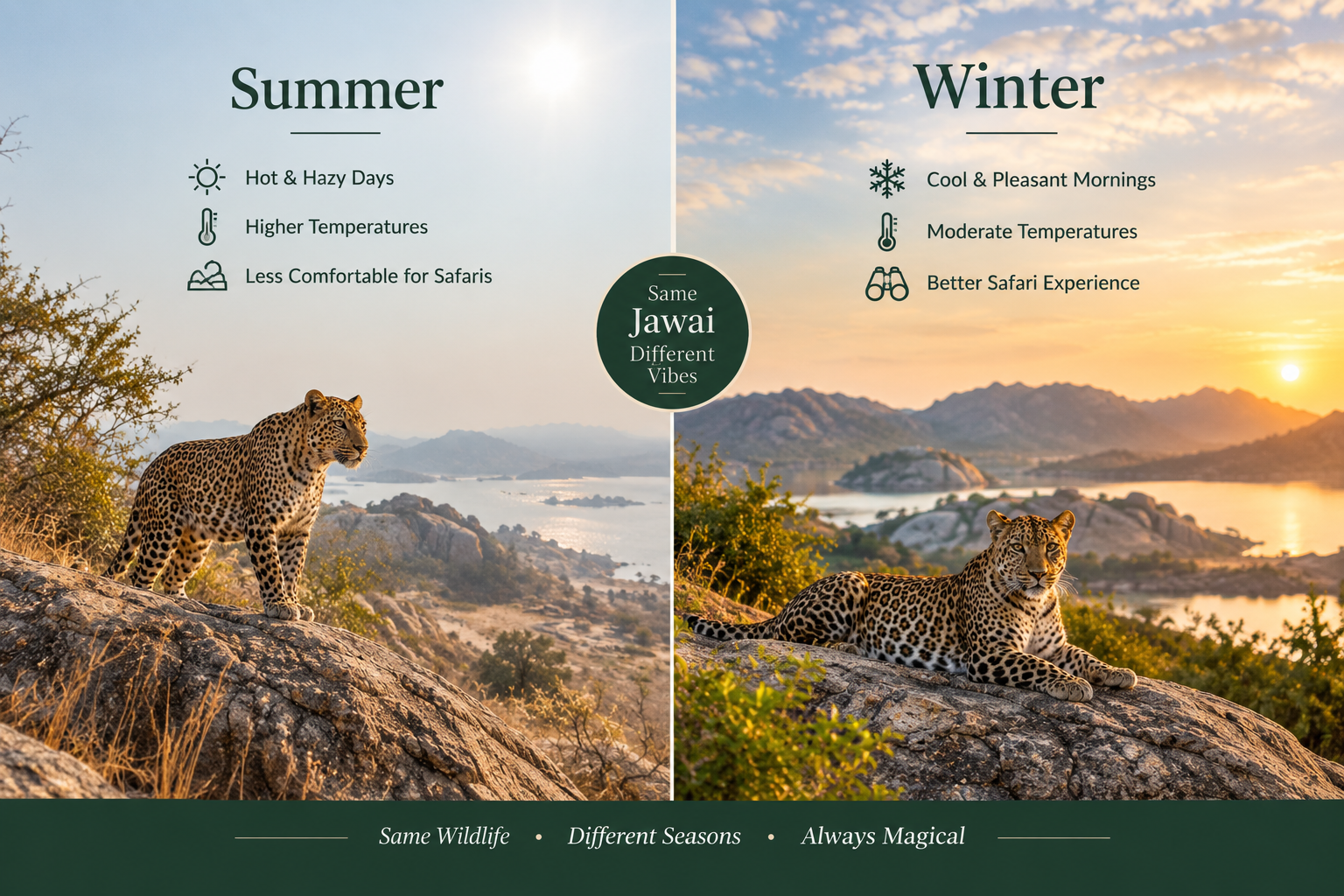
But here’s what those pages tend to leave out. That predictability comes with a real cost attached.
- Summer temperatures in Jawai regularly cross 40°C by mid-morning
- Your safari window shrinks to barely an hour before the heat turns unbearable in an open jeep
- Everyone, leopards included, just wants out of the sun as fast as possible
- Long, relaxed observation basically stops being an option
- Photography suffers too; harsh overhead light by 8 AM washes out most shots
Winter doesn’t make you pick between comfort and a good sighting; you actually get both. Long hours in the gypsy that don’t wreck you, decent gaps between slots so it’s not back-to-back, and honestly the odds are solid too; leopards basking out in the open plus better sightlines make sure of that. Nobody’s trading one for the other here. You get the sighting, you get to actually enjoy it, and you’re not scrambling for shade every twenty minutes like it’s some other time of year.
What a Winter Safari in Jawai Actually Feels Like
This bit is honestly hard to put into words until you’ve sat through one yourself, but here’s the attempt.
The Morning Drive: Mist, Gold Light & Silence
Picture this. Still dark out, maybe just a hint of grey creeping into the sky. Mist sits low over the ground, hasn’t lifted yet, and the granite hills have gone this odd silver, not quite day, not quite night. And it’s quiet; city folks especially find this kind of silence throws them off at first. No traffic, no noise, just the gypsy engine, some bird you can’t spot, and your own breath fogging up in the cold.
As the light builds, everything shifts to gold. This is exactly when photographers get their strongest shots of the whole trip. If you’re serious about coming home with good images, it’s worth a read through our guide on Jawai wildlife photography before you head out. It covers the light conditions and gear choices specific to this terrain.
Most safaris come with tea or coffee thrown in, and honestly, halfway through a cold morning drive that feels like the best thing in the world. Small detail, sure, but it matters way more than you’d expect when your hands have gone numb from the wind.
Evening Safaris: A Softer, Second Wind
Evening safaris bring a completely different mood. Softer light, warm tones spreading across the rock faces, and often a second burst of movement once leopards start stirring again after resting through the warmer midday hours. You’ll also notice winter migratory birds settling in around the dam edges during this time, a nice bonus even if leopards are the main reason you’re out there.
What ties both together is simple. Comfort. A Jawai Leopard Safari in Winter doesn’t push you to rush back for shade or cut the drive short halfway through. You can just stay out there, watch, wait, and let the whole thing unfold at its own pace.
When to Book Your Jawai Safari for Winter
Winter is peak season here, plain and simple, which means demand climbs fast, and certain windows fill up before you’d expect.
Here’s what tends to book out first every year.
- Christmas and New Year week, last week of December into early January
- The Republic Day long weekend in late January
- Basically any regular Saturday or Sunday through December and January
If your dates fall on one of these, try to book three to four weeks out. Regular weekdays in November or March give you way more breathing room, but weekends in December and January tend to fill up faster than people expect.
Bookings for Jawai safaris are usually handled directly over WhatsApp rather than through an online payment gateway, so it’s worth reaching out early and confirming your slot in writing rather than waiting until the last minute and hoping something’s available.
For the full rundown on safari types, timings, and current pricing, check our complete guide to Jawai leopard safari booking. It covers everything from morning versus evening slots to exactly what’s included in each one.
One quick tip for Jawai safari booking in winter: morning slots go first, and for good reason. That’s when the basking behaviour is most reliable, so if you can only fit in one safari on your trip, make it the morning drive.
Packing Smart for a Cold-Weather Leopard Safari
A handful of things catch first-timers off guard every single winter season. Don’t let it be you.
- Layers beat one heavy jacket. Mornings start freezing but warm up fast once the sun’s fully out. Layers let you adjust on the go instead of overheating by 9 AM.
- Gloves are not optional. An open gypsy at 6 AM in January is colder than it looks in photos, especially once you add wind from the vehicle moving
- Get there 10 to 20 minutes early. Turn up late in winter, and you miss the good golden-hour light; safaris don’t wait for anyone
- Carry a spare camera battery. Cold weather eats battery life fast, so keep the spare in an inside pocket so it stays warm
- Pack sunglasses too. Once the sun’s fully up, the glare off the bare rocks can be pretty harsh
- Don’t skip sunscreen. Rajasthan’s winter sun is stronger than it feels by midday, even when the air’s cool
- Keep your ID proof handy. It’s a standard requirement for safari entry, and nobody wants to be sorting through bags at the gate
None of this is complicated. It’s just the small stuff that separates a slightly miserable morning from a genuinely great one.
Where to Stay for the Best Winter Leopard Safari Experience
Your stay matters almost as much as your safari slot when winter’s involved. Cold mornings mean you want a place that’s actually built around the season, not just four walls and a bed.
Okay, so the bonfire thing at Agvani, that’s genuinely one of my favourite bits about staying there in winter. You come back from a morning drive half frozen, plonk yourself down near the fire, and somehow end up in a 40-minute conversation with a stranger about whether that was actually a leopard or just a really convincing rock.
Where you stay doesn’t really change the comfort side of things. Tents, cottages, the ones with the private plunge pools- all of them are set up to deal with how much the temperature swings here in winter. And yeah, air conditioning in winter sounds like a weird flex, but it’s not really about cooling; it’s about keeping things steady either way. Cold night, no problem. Random warm afternoon, also no problem.
Food’s the other half of it. You’re not going to want a light lunch after sitting in an open jeep for hours in the cold; you want the Rajasthani thali, properly hot, and the resort’s in-house place does exactly that.
If you haven’t picked a place yet, there’s a full write-up on the best resort in Jawai Bandh that gets into room types and what each property actually offers versus what they just claim to.
And if you’re travelling in from Udaipur, Jodhpur, or Ahmedabad, check the route guide first. It’ll save you from working things out mid-drive.
Ready for Your Winter Safari?
Winter in Jawai isn’t just a decent time to visit. It’s arguably the best version of this trip you’ll get. The weather’s on your side instead of working against you, leopards are easier to spot thanks to their basking habits, and honestly, the whole landscape looks sharper under that clear winter light. First leopard sighting or third trip back, winter tilts things- the comfort and the odds, both in your favour.
So don’t wait until the good dates are gone. Message Agvani Resort on WhatsApp today, lock in your safari slot, and book your stay while winter availability is still wide open. Head to agvani.com now and start planning the Jawai trip you’ll actually be talking about next year.
FAQs
Is winter really better than summer for leopard sightings in Jawai?
Honestly, depends on what matters to you. Summer’s more predictable; leopards stay near water when it’s hot. The problem is, that heat shrinks your safari window fast; you don’t get much real time out there. Winter’s the opposite. Drives run longer, they’re far easier on you, and sightings hold up just as well. Leopards often bask right on the rocks in the morning sun, and with the landscape thinned out this time of year, they’re honestly easier to spot too.
How cold does it get in Jawai during a winter safari?
Mornings in December and January can drop to 6 to 8°C before sunrise, so yes, it’s cold. Once the sun’s up, it warms fast, days usually sit between 10°C and 25°C. Pack real layers for the early drives, you’ll want them if you feel the cold easily.
How far in advance should I do Jawai safari booking for winter?
Weekdays, a week or two of notice is usually enough. Weekends in December and January, or anywhere near Christmas and New Year, you’ll want more lead time. Book three to four weeks out if you want your pick of slots; bookings mostly get confirmed over WhatsApp rather than through some automated system.
What should I wear on a winter morning safari?
Layers, no question. Warm base layer, jacket over that, and don’t skip the gloves. Mornings get cold enough that gloves actually matter during the drive, even once the sun’s up and things start warming a bit.
Is December-January too crowded for a good safari experience?
It’s the busiest stretch of the year, no doubt, but crowding here really just means booking demand, not a packed jeep. Every gypsy is private to your group, so the only real impact is on getting a slot at all. Book early and the safari itself stays just as peaceful as you’d want.